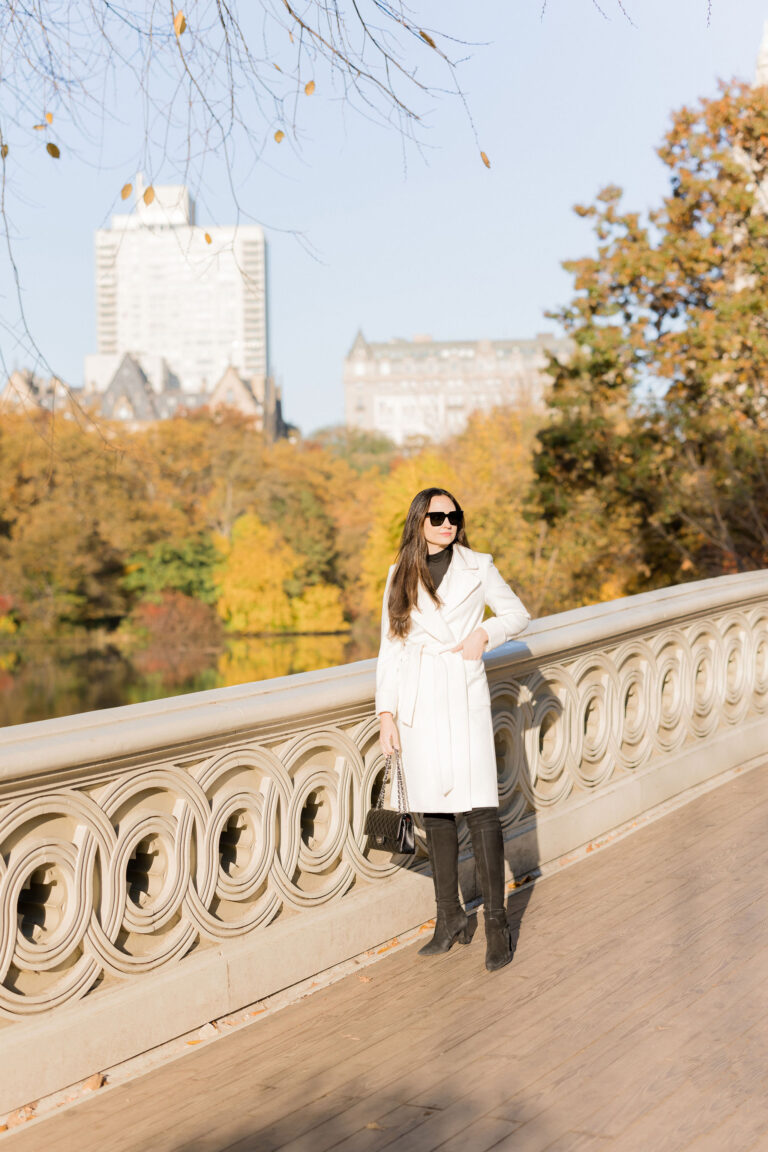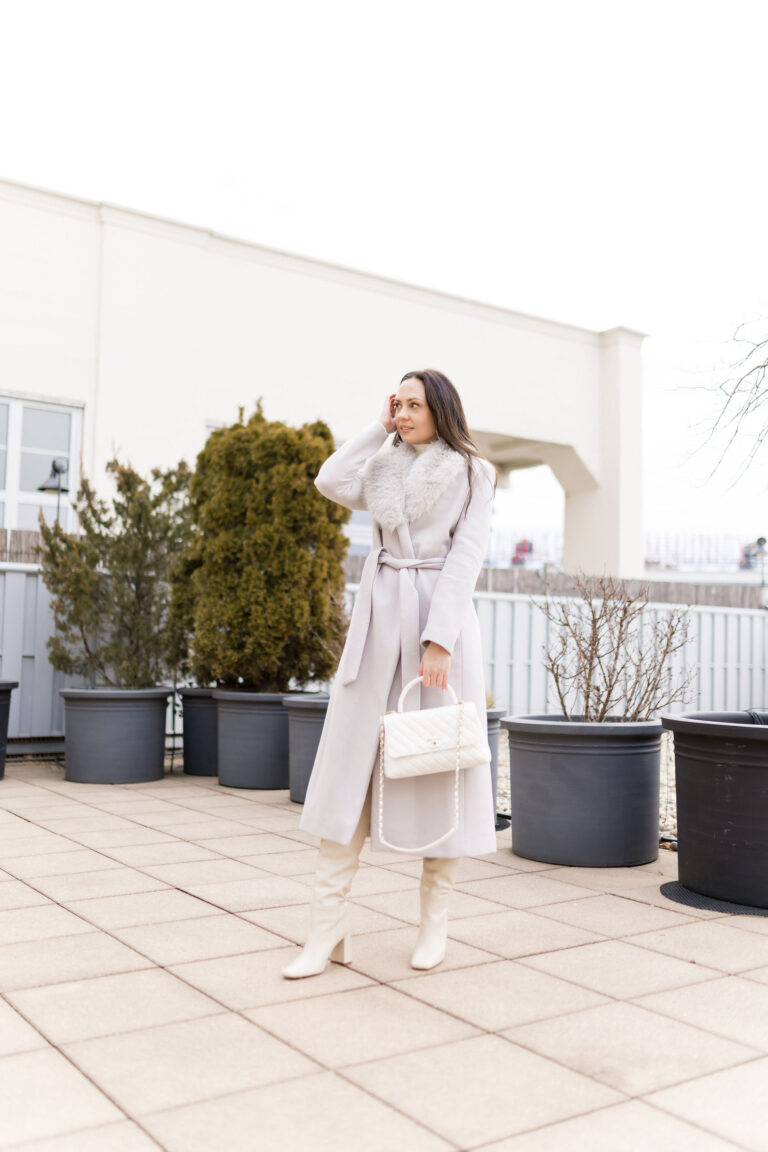
How To Create A Classic Wardrobe: Outerwear
This site contains affiliate links, you can view the full disclosure here for more information.
Outerwear is often the first thing people notice about an outfit. Even if you're wearing a simple sweater and some jeans, the right outerwear can instantly elevate your look. Here are the classic outerwear essentials to add to your new classic wardrobe.

The Classic Wardrobe Series
This article is Part 2 of my 8-part Classic Wardrobe Series. Browse the rest of the series below, or start with Part 1 if you're new here.
If you read Part 1 (the intro) of this series, you know that on this blog, building a classic wardrobe isn't about owning a ton of clothes. It's about intentionally curating a wardrobe that works together cohesively to simplify getting dressed, reduce decision fatigue, and support your everyday life. In many ways, it's part of a larger life reset, creating a wardrobe that works for you instead of against you.
Outerwear deserves its own conversation because, in my opinion, it's one of the hardest-working categories in your wardrobe. In fact, I think it can be one of the biggest game changers. A great wool coat or jacket isn't just there to keep you warm. It creates a first impression, pulls an outfit together, and often becomes the piece people remember most.
Unlike trendy pieces that may only be worn for a season or two, quality outerwear can last for years. I still have a leather jacket I bought nearly twenty years ago, and I still reach for it from time to time. I remember paying around $299 for it, but over the years, it has more than paid for itself. That's the beauty of investing in timeless, well-made pieces. If you take good care of them, they can stay in your wardrobe for a very long time.
Whether you're commuting to work, meeting friends for dinner, heading out on date night, traveling, or simply running errands, the right outerwear can instantly elevate an outfit while making getting dressed feel that much easier.
This post is all about classic outerwear essentials.
Before you Buy Outerwear
One mistake I see people make, and have made myself, is buying outerwear simply because it’s on sale, looks beautiful online, or is trending at the moment. But before adding another coat or jacket to your closet, it’s worth taking a step back and thinking about how you actually live. In Part 1, I did mention shopping sales. Going into these sales with intention will help you craft your classic wardrobe over time.
Ask yourself:
• What climate do I live in?
• Do I experience cold winters, or is the weather mostly mild?
• Do I need a true winter coat, or would lighter layers like a trench coat and bomber jacket make more sense?
• Do I work in an office, or do I dress casually most days?
• Do I spend a lot of time walking outdoors?
• What colors already make up most of my wardrobe?
Every wardrobe should reflect the person wearing it. The goal is not to build a closet that looks impressive in theory but does nothing for your real life.
Remember, we’re building a wardrobe that supports your life, not someone else’s Pinterest board. We can, however, use Pinterest for  inspiration .
What Makes Great Outerwear?
A beautiful coat isn't just about appearance. The details determine whether you'll love wearing it for years or regret buying it after one season.
Outerwear Fabric Matters
Whenever your budget allows, prioritize natural fibers. Look for fabrics like:
- Wool
- Cashmere blends
- Cotton
- Linen
These materials generally age better, breathe well, and/or look more refined than lower-quality synthetic alternatives.
Pay Attention To Construction
The small details often separate a coat that lasts from one that doesn't. Look for:
- Quality lining
- Durable buttons
- Strong zippers and hardware
- Neat stitching
- Appropriate weight for your climate
Fit is Everything
Even the most beautiful coat won't look its best if it doesn't fit properly. Pay attention to:
- Shoulder fit
- Sleeve length
- Overall length
- Enough room to comfortably layer a sweater underneath
If you can barely move your arms while trying it on, or if the sleeves are too long/short, you'll probably avoid wearing it.
The Classic Outerwear Pieces
Here are the classic outerwear pieces I've included on the classic wardrobe checklist.
1. The Wool Coat
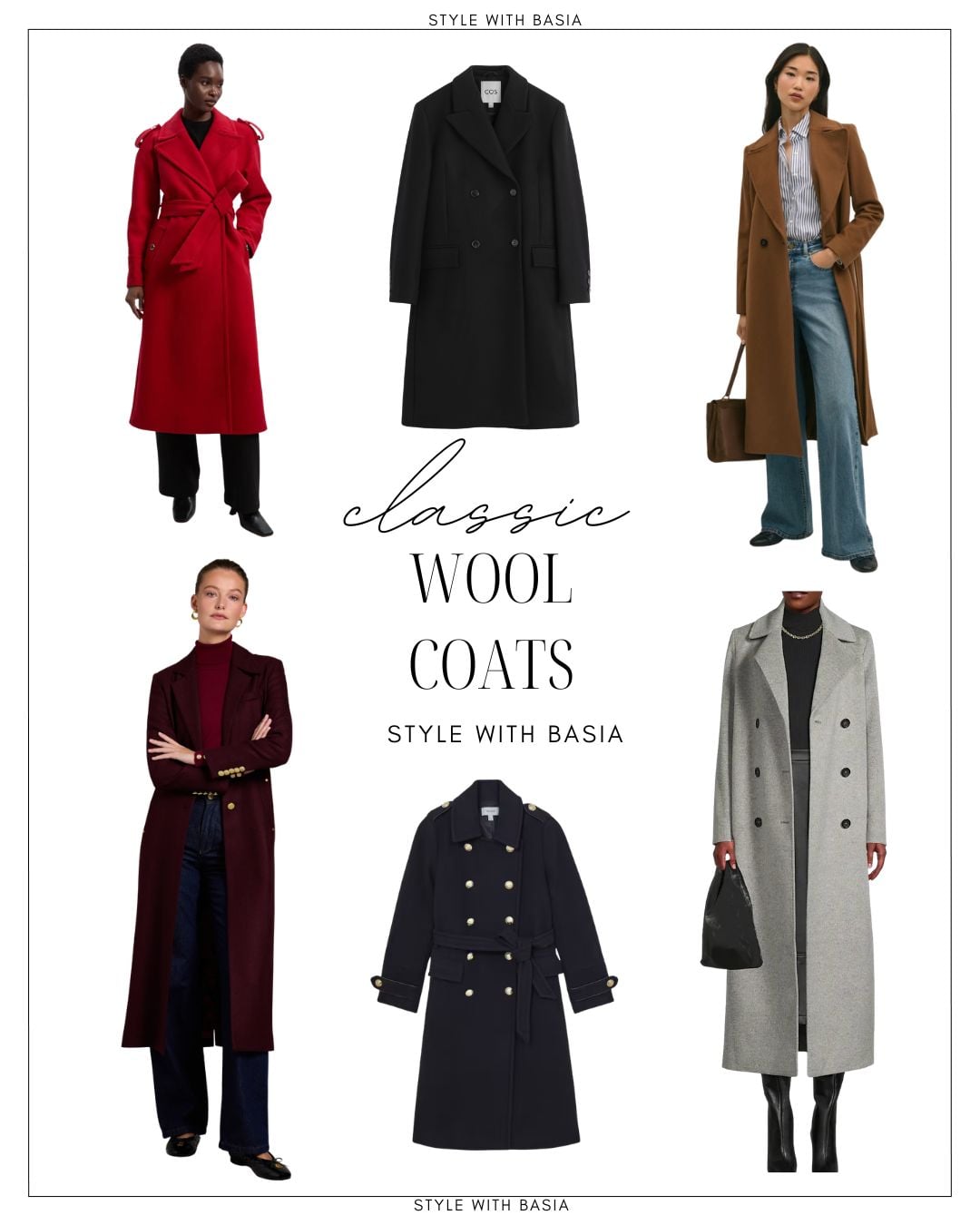
If I could recommend just one coat for a classic wardrobe, a wool coat would be at the top of my list. It's one of those rare pieces that instantly makes an outfit feel more polished, whether you're wearing jeans and a sweater or dressing up for work or dinner.
Unlike trend-driven pieces, a well-made wool coat can last for many years. Because classic silhouettes don't change much over time, it's an investment you'll likely reach for season after season.
Great For:
- Work and the office
- Date nights
- Dinner with friends
- Holiday gatherings
- Everyday wear during cooler months
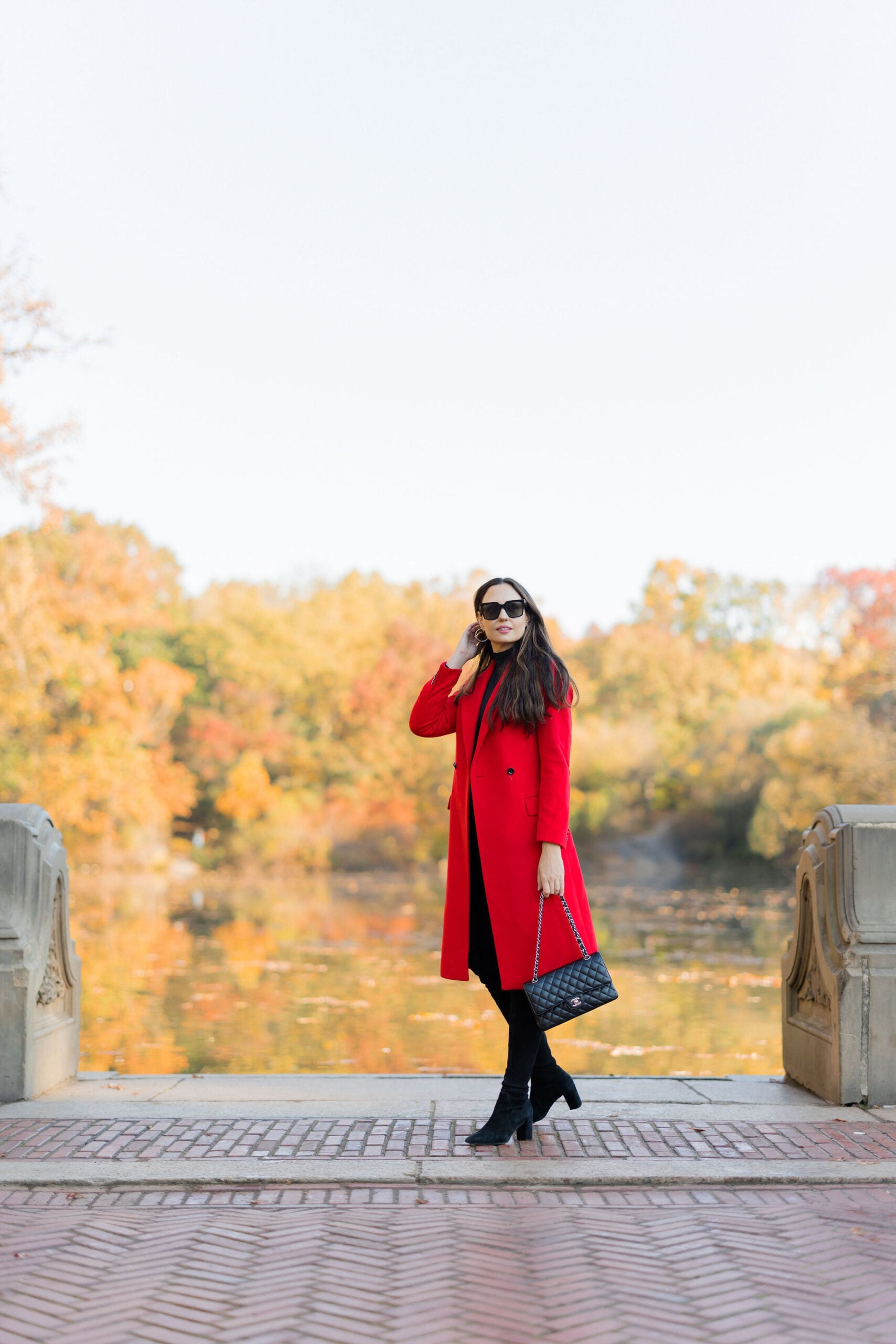
For your first wool coat as you build out your classic wardrobe, stick with a versatile neutral like camel, black, charcoal, navy, or chocolate brown. Choose a color that works with the clothes you already own so you'll get the most wear out of it.
I recommend choosing a coat that's at least 70% wool. The higher the wool content, the warmer the coat will be. If you opt for a coat with a lower wool percentage, consider sizing up so you can comfortably layer a chunky sweater or cardigan underneath. Layering can make a significant difference in keeping you warm.
You can also choose a coat with less than 70% wool and wear it during the milder parts of the season, then switch to a down parka once temperatures really start to drop. This approach gives you the most versatility while ensuring you're dressed appropriately for changing weather.
Throw it over jeans and a sweater, tailored trousers, or even a knit dress. A great wool coat has a way of making almost any outfit look more intentional.
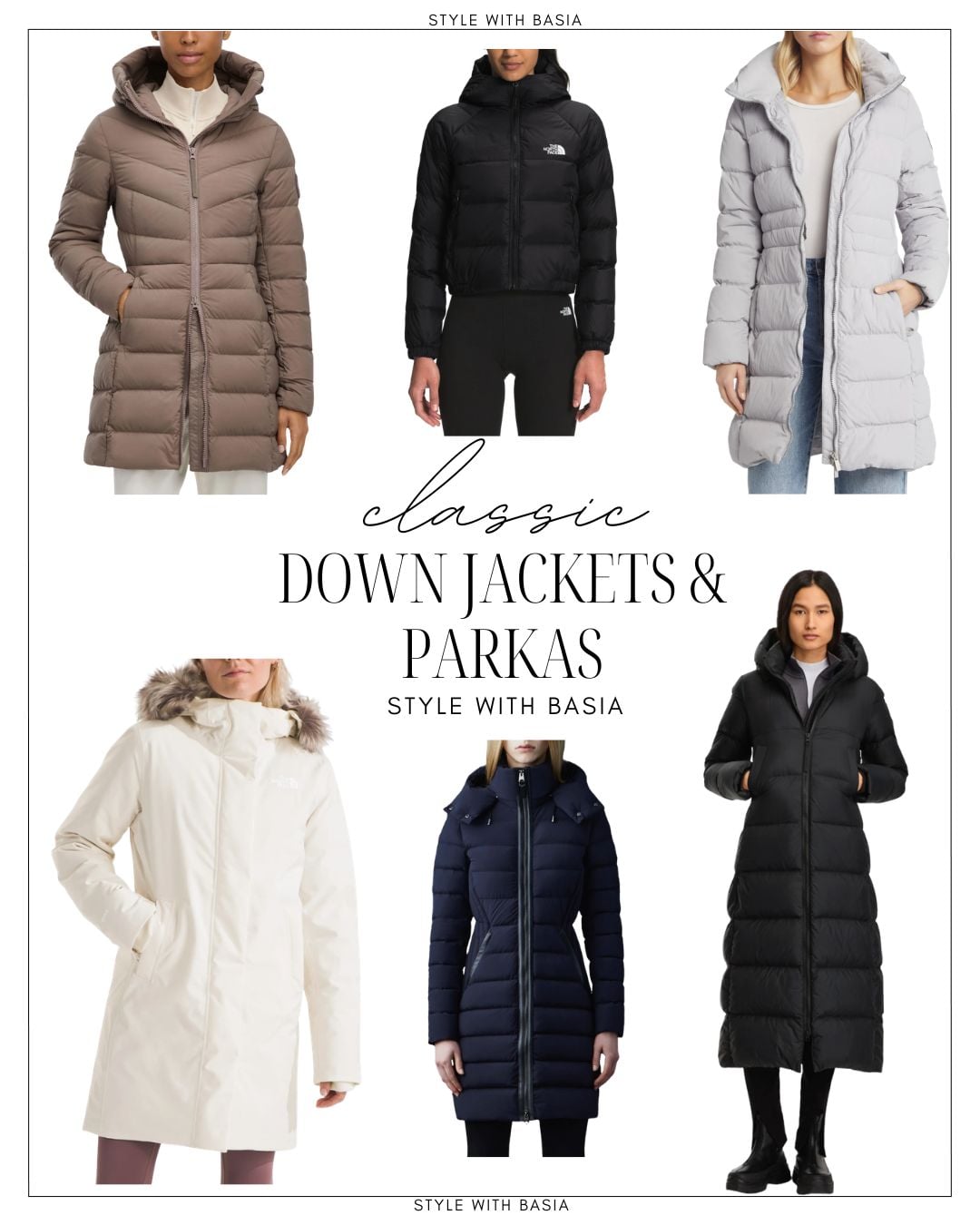
2. The Down/Puffer Jacket or Parka
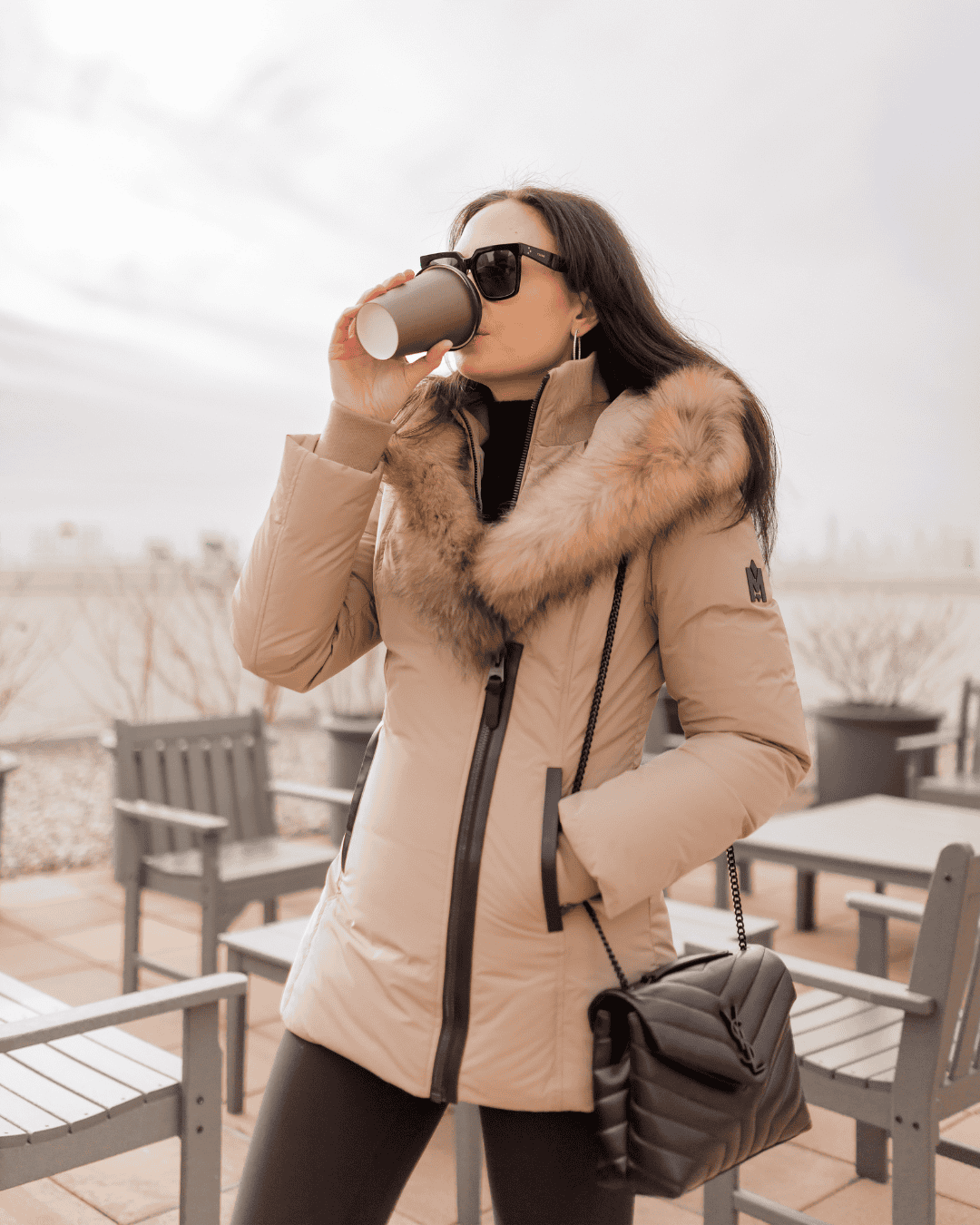
If you live somewhere with cold winters, a warm winter coat isn't optional; it's essential. While it may not be the most glamorous piece in your wardrobe (or the least expensive), it's often the one you'll wear the most for several months of the year. This has been one of the best investments I have made, living through the cold winter months in New York City. The right winter coat lets you enjoy the season rather than rushing from one building to the next.
Great For:
- Cold climates
- Walking or commuting
- Snowy or windy weather
- Every day winter wear
- Outdoor activities
For your first winter coat, I'd recommend choosing a versatile neutral like black, navy, olive, or charcoal. These colors pair easily with the rest of your wardrobe and won't feel dated after a season or two.
Don't worry about dressing this coat up. Focus on finding one that's warm, comfortable, and fits well over sweaters and heavier layers. Add personality with a beautiful scarf, hat, or gloves.
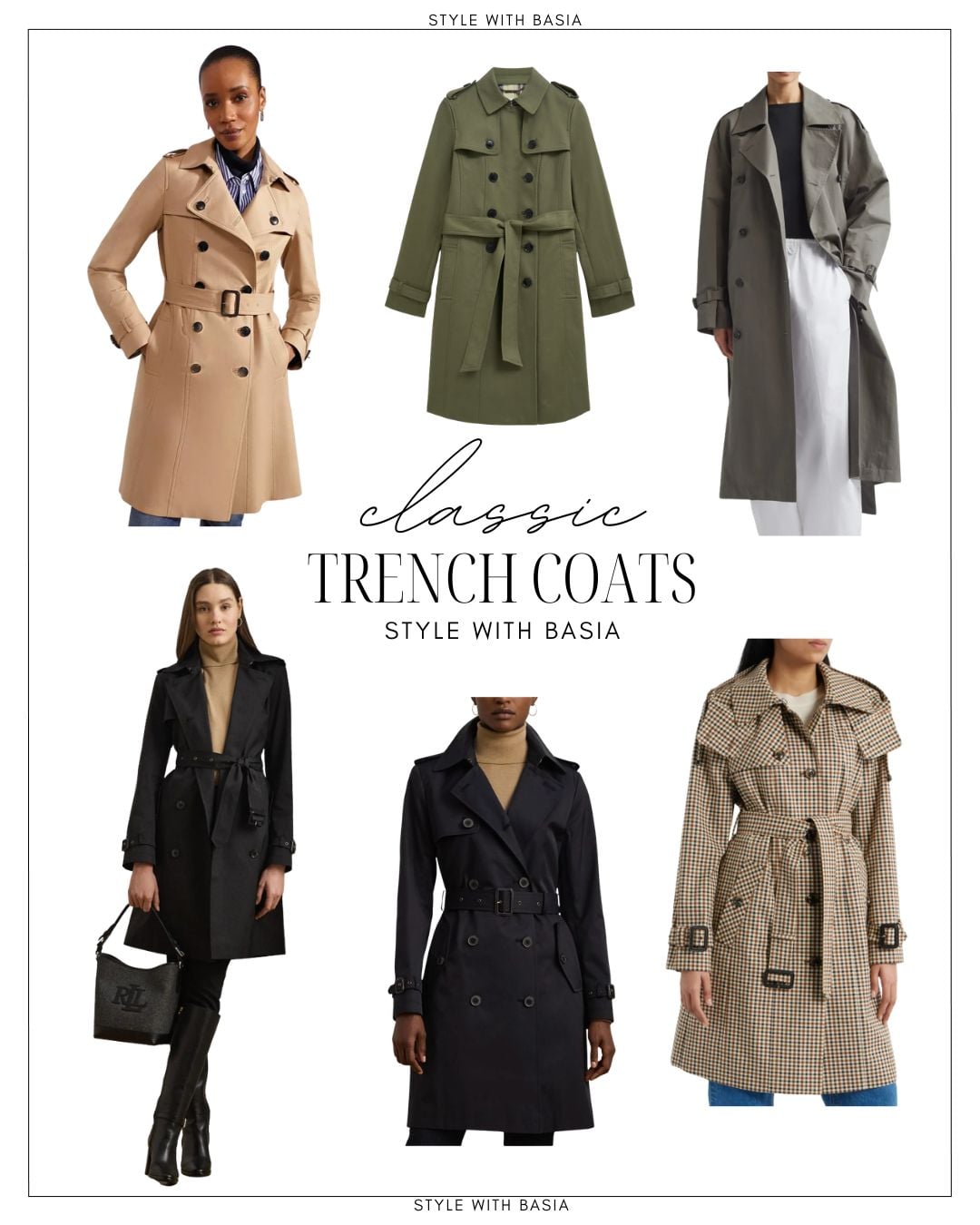
3. The Trench
If you're building a classic wardrobe, a trench coat is one of those pieces you'll probably find yourself reaching for more often than you expect. It's lightweight enough for those transitional periods between the seasons when it's too warm for a wool coat but not quite warm enough to go without a jacket.
What I love most about a trench coat is how effortlessly it pulls an outfit together. You can throw it over jeans and a T-shirt to run errands, or over trousers and a blouse for work. It's polished without feeling overdressed, which makes it extremely versatile.
Great For:
- Spring and fall
- Rainy days
- Work and the office
- Travel
- Weekend outings
- Layering over both casual and dressier outfits
For your first trench coat, I'd stick with a timeless neutral like beige, stone, khaki, olive, navy, or black. A classic double-breasted style with a belt will give you the most versatility and is unlikely to look dated in a few years.
When shopping for one, pay attention to the fabric. A cotton or cotton-blend trench tends to drape nicely and is breathable enough to wear comfortably through changing temperatures. Water-resistant fabrics are a nice bonus if you live in an area with frequent rain. It's also useful to have a water-resistant fabric for those rainy Spring days.
For sizing, you want enough room to layer comfortably without the coat looking oversized. A trench should feel easy to move in because it's the kind of jacket you'll often wear while commuting, traveling, or spending time outdoors.
One thing to keep in mind is that a trench coat isn't meant to keep you warm through the middle of winter. Think of it as your go-to jacket for the milder weather. Once temperatures start to drop, that's when it's time to switch to a wool coat or a down parka.
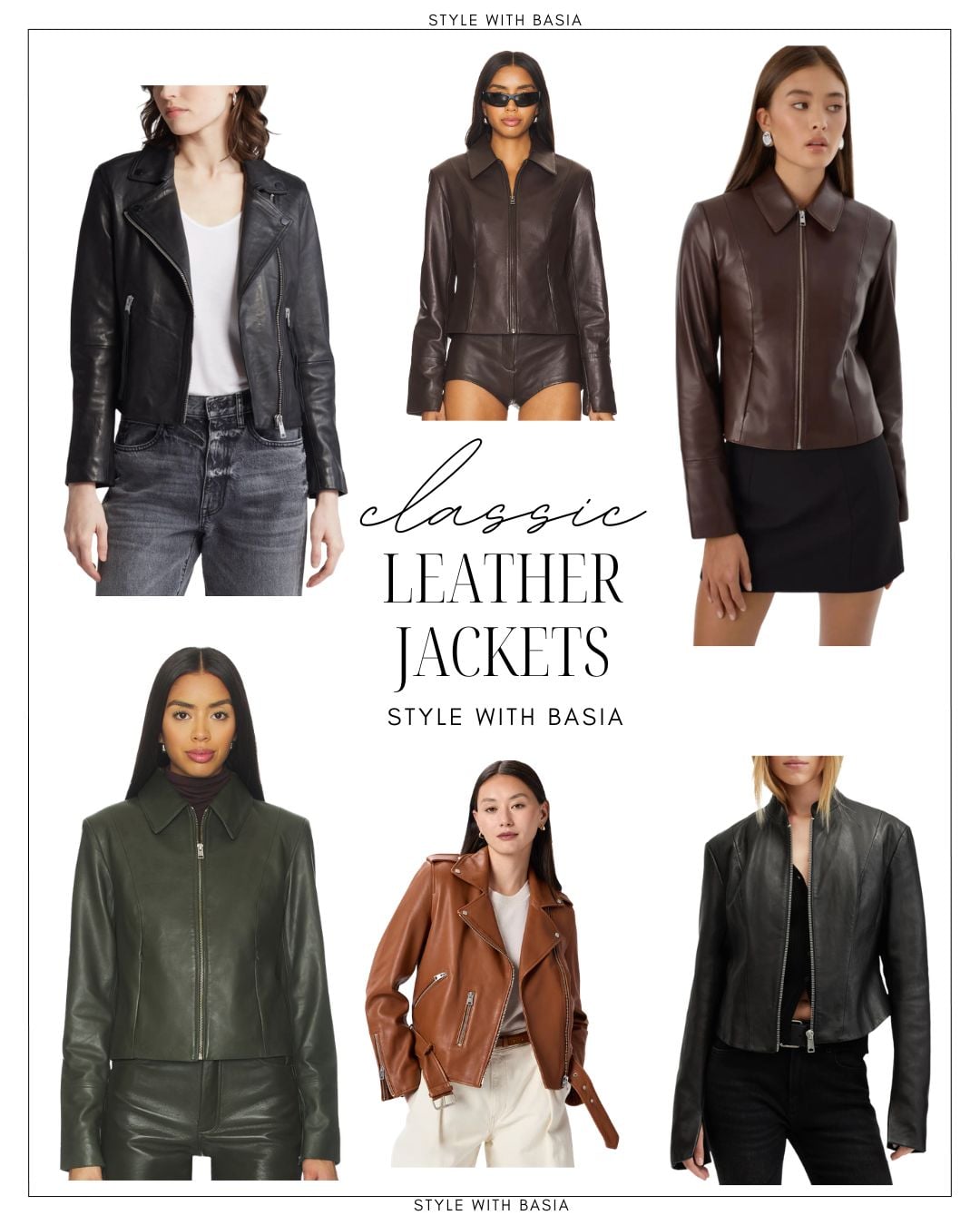
4. The Leather Jacket
A leather jacket is one of those pieces that adds a little personality and edge to a classic wardrobe. While a wool coat or trench coat leans more polished, a leather jacket brings in a bit of contrast. It's an easy way to make a simple outfit a bit more interesting.
A classic leather jacket is one of those pieces that can stay in your wardrobe for years. There are a few different styles to choose from. For your first-ever leather jacket, I would stick to clean lines. If you want to invest in a second leather jacket down the line, I'd go for a biker jacket.
Great For:
- Casual everyday wear
- Date nights
- Weekend outings
- Travel
- Concerts and sporting events
- Layering during spring and fall
For your first leather jacket, I'd stick with black if you're looking for the most versatility. It's easy to pair with almost anything and works well for both casual and slightly dressier outfits. If black feels a little harsh against your coloring, chocolate brown is another beautiful classic option.
When shopping for one, pay attention to the fit. It should feel comfortable through the shoulders and allow enough room for a lightweight sweater underneath.
If you're deciding between genuine leather and faux leather, both can work. Genuine leather often softens and develops character over time, while today's faux leather options have come a long way and can be a great choice depending on your budget and personal preferences.
Throw it over jeans and a T-shirt, a knit dress (super chic), tailored trousers, or even a simple sweater and sneakers. A great leather jacket adds a bit of structure and personality while still fitting seamlessly into a classic wardrobe.
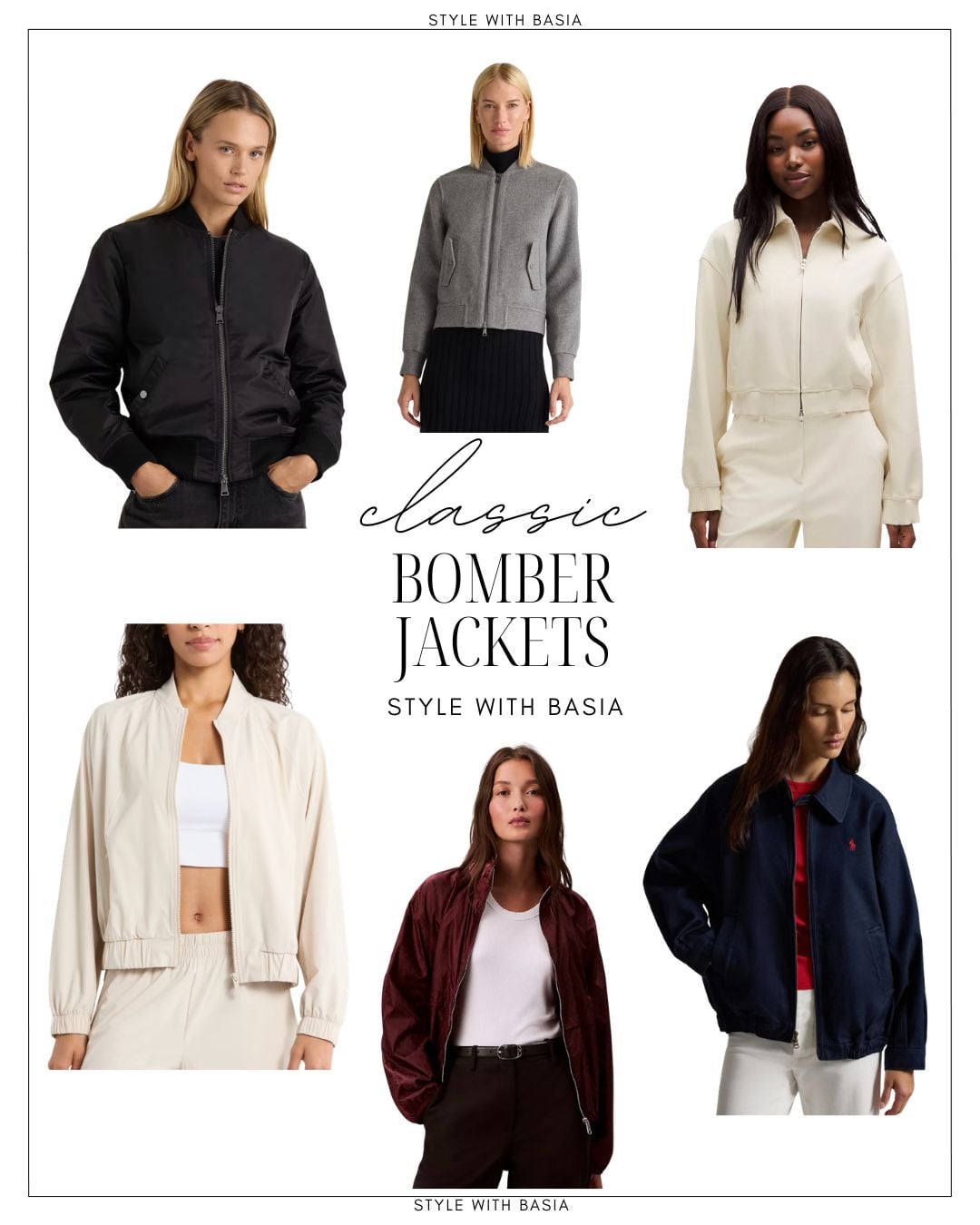
5. The Bomber Jacket
I think of the bomber jacket as more of a modern classic piece. It may not be as timeless as a wool coat or trench coat, but it's been a wardrobe staple for decades and has definitely proven its staying power. It is a great option if your everyday style leans more casual. I love wearing my bomber jacket when I'm traveling.
Great For:
- Casual everyday wear
- Running errands
- Weekend outings
- Travel
- Spring and fall
- Layering over jeans, leggings, and casual dresses
For your first bomber jacket, I'd recommend sticking with a versatile neutral like black, olive, navy, beige, or taupe. These colors are easy to pair with the rest of your wardrobe and won't feel limiting when you're getting dressed.
When shopping for one, look for a style that isn't overly oversized or heavily embellished. A relaxed fit that hits around the hip tends to be the most versatile and layers comfortably over T-shirts and lightweight sweaters. If you want a more polished look, choose one with minimal hardware.
Throw it on with jeans and sneakers, leggings and a sweatshirt, or even over a simple knit dress. It's an easy piece to reach for when you want to look put together while still feeling comfortable.
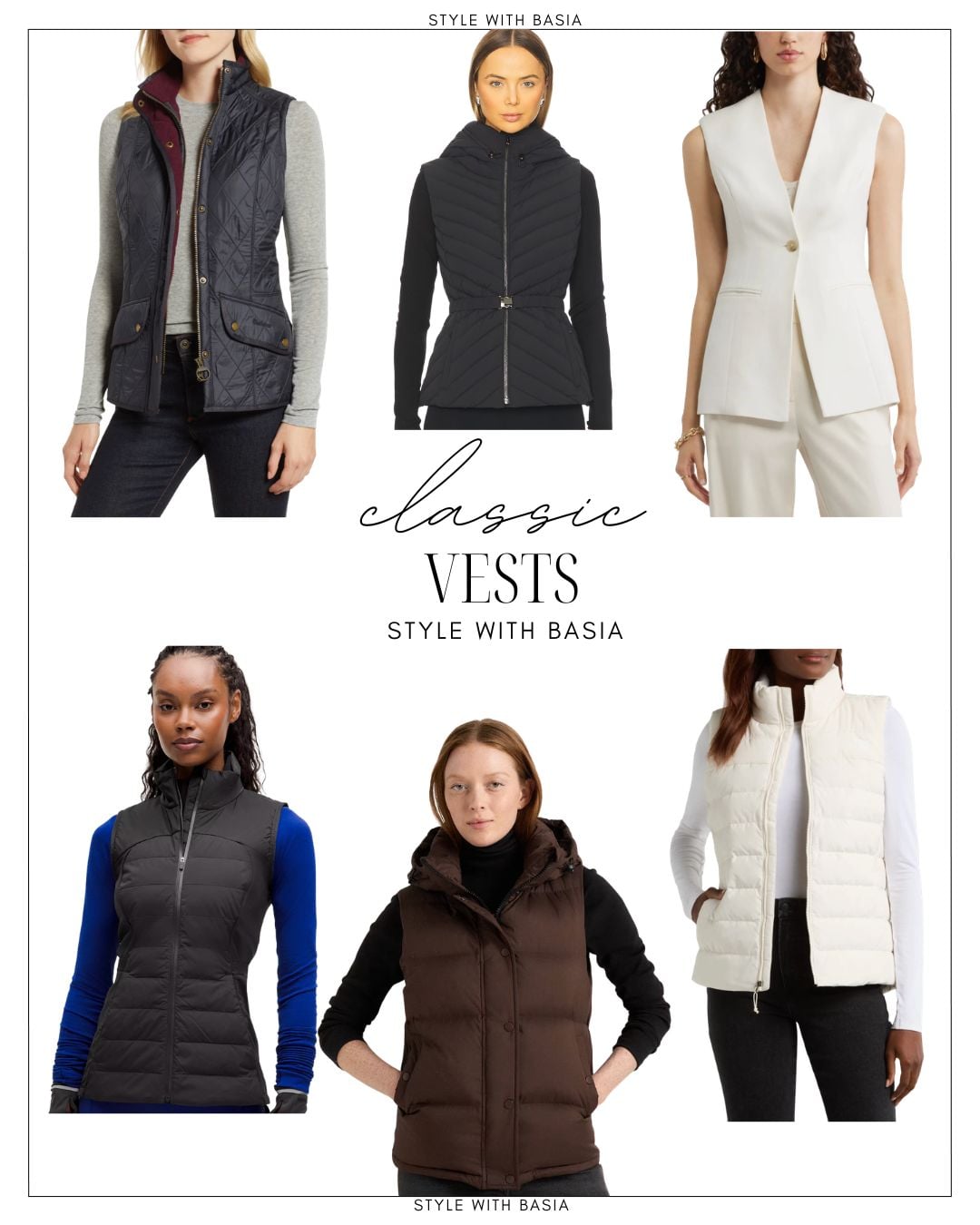
6. The Quilted or Down Vest
I consider a vest more of a "nice to have" piece in a classic wardrobe. It's not as essential as a wool coat or trench coat, but once you own one, you'll probably be surprised by how often you reach for it. It's perfect for those in-between days when a sweater isn't quite enough, but a full jacket feels like too much.
Great For:
- Morning walks
- Pumpkin picking
- Apple orchards
- Road trips
- Running errands
- Layering during spring and fall
For your first vest, I recommend choosing a neutral color like black, navy, olive, cream, or chocolate brown. These colors pair easily with the rest of your wardrobe and are versatile for everyday wear.
Quilted vests are a personal favorite of mine because they're lightweight, easy to layer, and add just enough warmth without feeling bulky. If your style leans a little more polished, a tailored vest can also be a beautiful addition and pairs well with trousers, denim, or matching suiting. It can look very equestrian, which I love in the fall.
When shopping for a vest, think about how you'll actually wear it. If you're looking for something practical, choose a style that's roomy enough to layer over a sweater or sweatshirt. If you want a more elevated look, opt for a tailored silhouette that can be worn on its own or layered over a blouse.
7. The Cape or Poncho
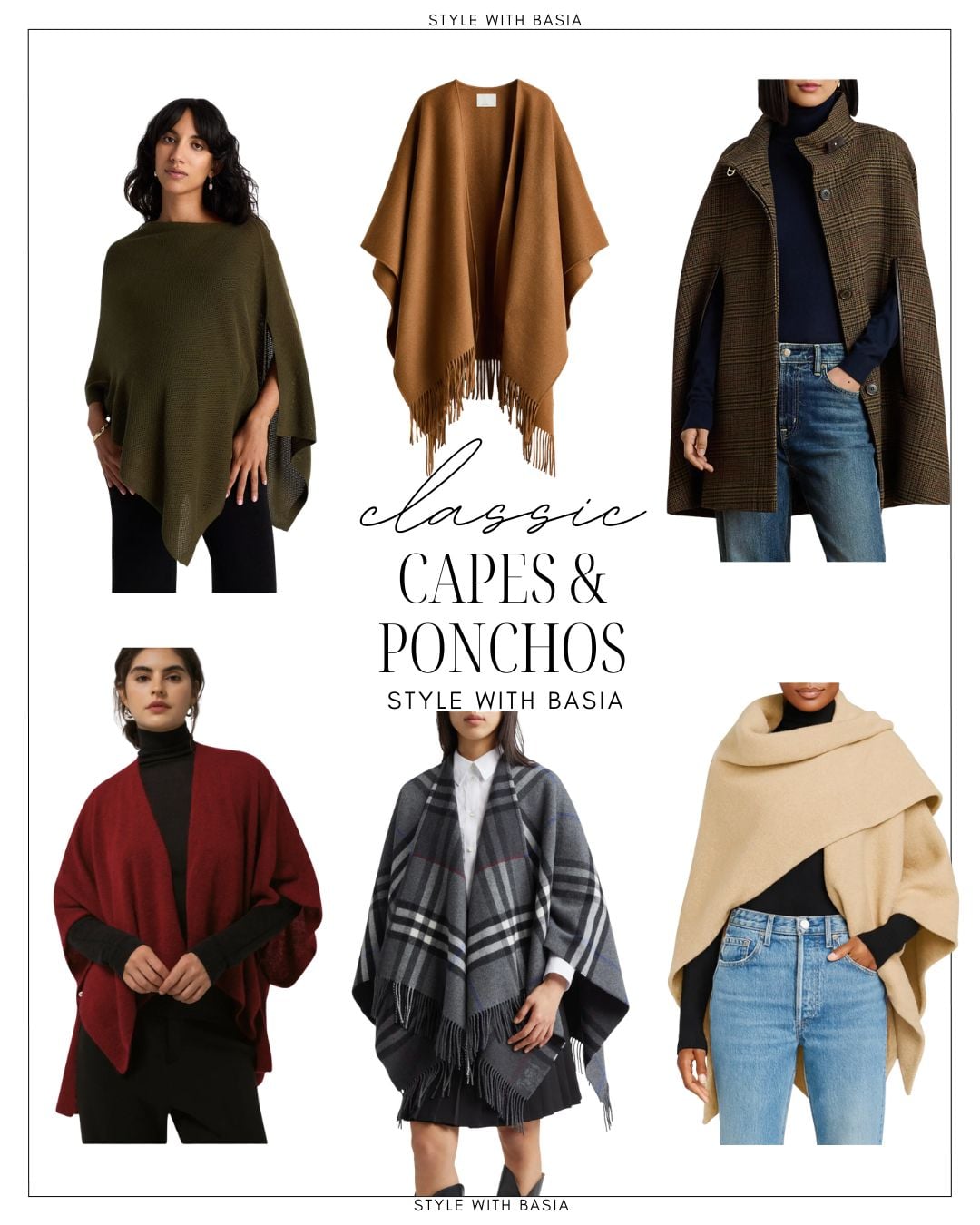
A cape or poncho is another "nice to have" piece in a classic wardrobe. It's less of an everyday essential and more of a grab-and-go layer for those transitional days when you want a little chic warmth without wearing a full coat.
One of the things I love about a cape or poncho is how effortlessly it can elevate a simple outfit. Throw one over a black T-shirt or turtleneck and your favorite pair of jeans, and it instantly creates a polished, put-together look with very little effort. There is something about the way it drapes that adds that effortless elegance.
Great For:
- Work and the office
- Date nights
- Fall outings
- Apple or pumpkin picking
- Seeing the cherry blossoms
- Travel
I personally tend to gravitate toward softer, less structured capes and ponchos. I find they're a little easier to style and have a more relaxed, casual feel while still looking classic. More structured capes can be incredibly elegant, especially for dressier occasions, but they often require a bit more intention when putting an outfit together.
For your first cape or poncho, I'd recommend choosing a neutral color like camel, black, olive, or cream. Pick a color that works with the rest of your wardrobe so it naturally fits into your existing outfits.
Whether you pair it with denim and boots, tailored trousers, or a simple knit dress, a cape or poncho is an easy way to add warmth and a little extra interest to your outfit during the cooler months.
Final Thoughts
Building a classic wardrobe is not about owning every type of coat; it's about choosing pieces that make the most sense for your lifestyle.
Start with the essentials that you'll wear the most, then build from there over time. If you live somewhere with cold winters, that might mean investing in a wool coat and a down parka first. If your climate is milder, a trench coat or leather jacket may make more sense. If your climate is seasonal, maybe a down parka and a light trench to start. There really is no one-size-fits-all approach.
The goal is to have outerwear that works with the rest of your wardrobe and makes getting dressed a little easier. When your coats coordinate with the clothes you already own, you'll naturally get more wear out of them and feel like you have more outfit options without buying more. Just remember to stick to the color palette you chose in the intro post to avoid buying pieces that don't fit cohesively with it. If you need a refresher, here is the link to that post.
Remember, a classic wardrobe isn't built in a weekend. It's something you curate, one thoughtful piece at a time.
You Might Also Enjoy


 For exclusive updates, seasonal capsules, and refined living inspiration, delivered with elegance, always.